 Skip to content

Retirees comparing Spain vs Portugal for retiring in 2025 are considering two of the safest, sunniest, and most lifestyle-rich countries in the world. Both consistently rank among the top global retirement destinations thanks to their warm climate, accessible healthcare, and relaxed Mediterranean culture.
But while their appeal overlaps, the decision between them ultimately comes down to three critical factors in 2025: Financial Thresholds, Tax Regimes, and the Path to Citizenship. These are the areas where the two countries diverge most clearly and where retirees (especially Americans and Canadians) must focus their attention.
For non-EU retirees, the primary residency routes are Portugal’s D7 Visa, often viewed as the classic Portugal retirement visa, and Spain’s Non-Lucrative Visa (NLV). Each offers long-term residency, family inclusion, and the potential for citizenship, but with very different rules, costs, and obligations.
In this blog, we will break down every key difference so you can confidently choose the country that fits your financial, lifestyle, and long-term retirement goals.
Table of Contents
- Residency Visa Requirements (The Entry Threshold)
- Tax Implications for Retirees in Spain VS Portugal
- The Cost of Living in Portugal VS Spain
- Healthcare in Spain VS Portugal for Retiring
- Climate and Culture in Portugal VS Spain
- Best Places to Retire in Portugal
- Best Place to Retire in Spain
- Need Help Choosing Between Spain vs Portugal for Retiring?
Residency Visa Requirements (The Entry Threshold)
When looking at retiring in Spain vs Portugal, the financial thresholds are often the single biggest deciding factor. Portugal’s D7 Visa requirements are dramatically lower, while Spain’s Non-Lucrative Visa sets one of the highest passive-income thresholds in Europe. The table below highlights the key differences retirees must consider.
| Feature | Portugal D7 Visa (Portugal Retirement Visa) | Spain Non-Lucrative Visa (NLV) (Spain Retirement Visa) |
| Financial Threshold (Single Applicant) | ~€11,040 per year (100% of minimum wage) | ~€28,800 per year (400% of IPREM) |
| Spouse Requirement | +50% of the minimum income | +100% of IPREM (or €7,200/year) |
| Work / Remote Work Allowed | Yes — remote work, freelancing, and local work are permitted after the Residence Card is obtained. | No — strictly prohibits all work/remote work. However, after 1 year this permit can be modified into a self-employed permit or employee permit if you want to work. |
| Path to Citizenship | 5 years* | 10 years; 2 years for Ibero Americans; 1 year if you were born in Spain, are a descendant of a Spanish parent/grandparent, or are married to a Spanish national |
| Key Takeaway | Lower entry threshold, more flexible, and faster path to citizenship. | Much higher threshold and no work allowed. |
*Portugal’s naturalisation law has been proposed to require 10 years of residency for non-EU nationals. The change is not in force yet.
This comparison shows why many non-EU citizens exploring retirement in Portugal start with the D7 Visa. On the other hand, those researching the Spanish Non-Lucrative visa must prepare for higher financial requirements and a longer residency timeline.
Tax Implications for Retirees in Spain VS Portugal

When considering Spain vs Portugal for retiring, taxes are often the single biggest long-term differentiator to consider. Below, we have created a summary of the practical rules, as well as the major incentives and disadvantages retirees need to plan for in 2025.
Tax residency: The Baseline Rule
Portugal: Former NHR and the New Landscape
- NHR (Non-Habitual Resident) status: The widely used NHR regime (which offered favourable or exempt treatment for many foreign pensions and certain professional incomes) was closed to new applicants in 2024. Existing beneficiaries continue under the rules they received, but newcomers cannot opt in.
- New regime (IFICI): Portugal has re-focused incentives toward innovation and science. For example, they have targeted regimes (e.g., IFICI) aimed at scientific or highly specialised professionals. In general, these are not relevant to typical retirees.
- Pensions and standard taxation: For new arrivals, foreign pensions are taxed under Portugal’s ordinary progressive IRS scale, which can reach the top marginal rates.
- Wealth & inheritance: Portugal has no general wealth tax and typically favourable inheritance rules for immediate family (some stamp-duty-like exceptions may apply). This can be an advantage for high-net-worth retirees seeking simpler estate outcomes.
To summarize, the attractive, pension-friendly NHR option is no longer available for new applicants. Retirees must model retirement income under standard Portuguese tax rates and consider how that impacts net pensions.
Spain: The Traditional System and Key Disadvantages
- Pensions: Spain taxes foreign pensions as general income at progressive rates. Regional tax bands apply, but typical national brackets for general income range roughly from around 19% up to about 47% for top earners (exact bands vary by region).
- Wealth Tax: Spain levies a Wealth Tax (Impuesto sobre el Patrimonio) in most regions. Thresholds and rates for this tax vary depending on the autonomous community in which you reside. For high-net-worth retirees, this can be a major drawback compared with jurisdictions that do not tax net wealth.
- Beckham Law (special case): Spain’s historic Beckham Law, a special expat regime offering a flat 24% tax on employment income for a limited period, may help certain relocating professionals. However, it is not generally available to passive-income retirees as it targets salaried work.
- Regional variation: Spain’s autonomous communities can significantly alter effective tax burdens through surtaxes, wealth tax reliefs, and local allowances. As a result, a retiree’s final tax bill depends heavily on the region chosen.
Tying all of that together, retirees should carefully model their tax scenarios for retiring in Spain. This is especially true for high-net-worth individuals who are exposed to wealth tax or have significant pensions taxed as ordinary income.
When taking taxes into consideration, for both destinations, it is essential to understand the following:
- The 183-day rule matters. If you plan to split time between the U.S./Canada and Iberia, the number of days you spend in each country will determine tax residence and the final tax bill.
- Treat planning as bespoke. Personal circumstances (source and size of pension, investments, property ownership, family situation, and planned region of residence) dramatically change outcomes.
- Consult specialists. Given the recent changes in Portugal and the regional complexity in Spain, always consult a cross-border tax advisor to plan your net pension after tax, wealth tax exposure, social charges, and treaty relief.
The Cost of Living in Portugal VS Spain

When choosing between Spain vs Portugal for retiring, day-to-day affordability and lifestyle quality often matter just as much as visas and taxes. While both countries offer exceptional living standards, there are key differences worth noting.
Portugal
Portugal remains one of Western Europe’s most affordable retirement destinations. Daily living expenses such as restaurants, transport, healthcare, and utilities are generally cheaper than in Spain.
- Average monthly cost for a single person: ~€1,700 (including rent).
- Popular expat regions like the Algarve and smaller cities (Coimbra, Braga) offer particularly strong value-for-money.
Spain:
Spain tends to have slightly higher overall living costs, driven mainly by salaries and urban demand. However, categories such as groceries and suburban housing can be cheaper depending on the region.
- Average monthly cost for a single person: ~€1,822 (including rent).
- Housing in Lisbon is often more expensive than in Madrid, flipping the expectation for many retirees comparing capital cities.
Portugal is generally more affordable across categories, but Spain’s regional variety means savvy retirees can still find excellent value.
Healthcare in Spain VS Portugal for Retiring

Spain:
Spain’s public healthcare system (SNS) is consistently ranked among the best in the world. Retirees often praise the fast access to specialists, modern facilities, and a well-integrated primary care system.
Private insurance is widely used by non-EU retirees during their first years, but premiums remain reasonable.
Portugal
Portugal also offers high-quality healthcare, though the public system has longer waiting times, especially in major cities.
Private healthcare is very accessible and typically 20–25% cheaper than comparable private care in Spain. Many retirees opt to use both public and private services.
Climate and Culture in Portugal VS Spain
Portugal:
- Enjoys a milder, humid Atlantic climate, ideal for retirees who prefer cooler summers.
- It is also considered significantly safer than Spain, ranking #7 on the Global Peace Index, compared to Spain’s #23.
- Portugal boasts high English proficiency (especially in the Algarve, Lisbon, and Porto), making the transition easier for non-Portuguese speakers.
Spain:
- Offers far more geographic and cultural diversity, from Mediterranean coasts to mountain plains and island life.
- Warmer and sunnier overall, with higher sea temperatures, especially in the Mediterranean.
- Spain is known for its rich urban cultural scene, notably its many world-class museums, festivals, bustling nightlife, and culinary regions.
Best Places to Retire in Portugal
1. The Algarve: Sunshine, Safety & Expat Comfort

The Algarve remains Portugal’s top retirement hotspot for good reason:
- 300+ days of sunshine per year
- A well-established expat community, especially British, Dutch, German, and North American retirees
- Excellent golf, beaches, healthcare access, and walkable towns
- Property prices vary widely, but many inland towns still offer strong value
2. Lisbon & Porto: Urban Life with International Flair

Lisbon and Porto attract retirees seeking culture, city life, and direct international connections.
- Lisbon: Vibrant cafés, museums, coastal viewpoints, more expensive than Porto, but it has a major airport for easy travel
- Porto: More affordable than Lisbon, known for wine culture, riverside neighborhoods, and slower-paced urban life
Both cities have growing expat populations, strong healthcare options, and excellent public transport. The downside of these areas, however, is higher housing costs than in other regions in Portugal, especially in central areas.
3. The Silver Coast: Coastal Beauty & Lower Costs

Stretching north of Lisbon toward Coimbra, the Silver Coast is widely considered one of Portugal’s best value regions. The Silver Coast offers:
- Stunning beaches, a cooler climate, and it is less commercial than the Algarve
- Much lower property prices, including new-build homes
- Slower pace of life with charming historic towns (Nazare, Peniche, Caldas da Rainha)
This may be the best spot for retirees who want to experience Portugal’s coastal beauty and cultural charm without the Algarve’s higher costs or crowds.
Best Place to Retire in Spain
1. Costa del Sol: The Classic Expat Hub

The Costa del Sol in the south of Spain is one of Europe’s most established retirement destinations. The reasons for this are clear:
- Reliable sunshine, warm Mediterranean waters, and a well-developed expat ecosystem
- Popular towns like Marbella, Estepona, Benalmádena, and Mijas
- Excellent golf, beaches, hospitals, and international schools (useful for visiting family)
Property prices are rising, but depending on the town you choose, you can still find great value properties. Retirees looking for a social, active lifestyle with plenty of English-speaking services and communities should definitely consider the Costa del Sol as a destination to spend their golden years.
2. Valencia: Culture, Coastline & Affordability

Valencia consistently ranks among Europe’s best cities for retirement due to its balance of lifestyle and value. This city offers:
- A beautiful historic center, miles of beaches, and a vibrant food scene
- More affordable cost of living than Barcelona or Madrid in both rent and daily expenses
- High-quality healthcare and easy connections to other Spanish cities
It’s an ideal choice for retirees seeking culture, walkability, and a coastal city experience without big-city prices.
3. Costa Brava: Coastal Beauty With a Slower Pace of Life
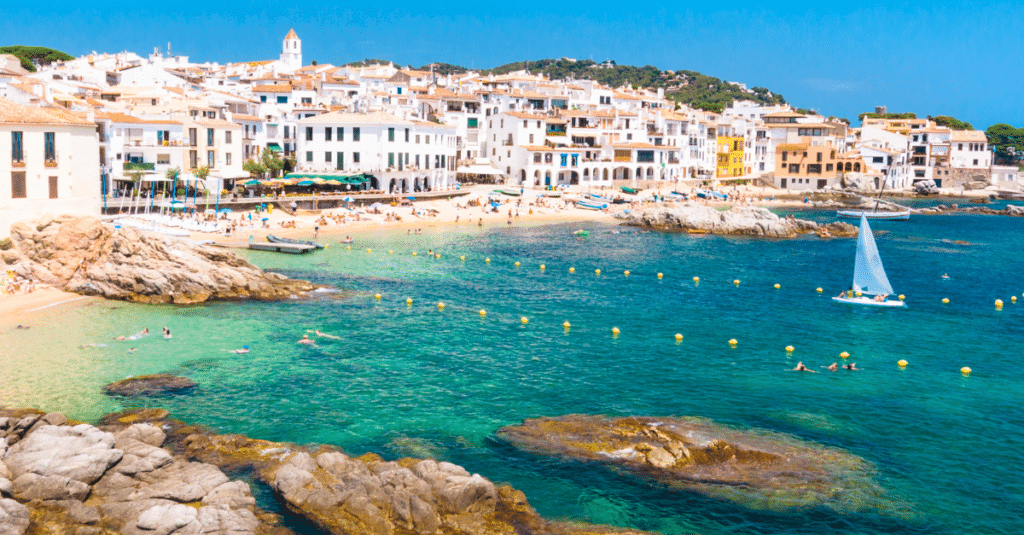
The Costa Brava, stretching along Catalonia’s northeastern coastline, appeals to those looking for a quieter alternative to Spain’s more crowded beach destinations. It is especially popular with retirees and expats who value scenery, culture, and a more authentic local feel.
The Costa Brava is known for:
- Dramatic coastlines with hidden coves and clear waters
- Charming seaside towns like Begur, Cadaqués, and Calella de Palafrugell
- A slower, more traditional pace of life compared to major coastal cities
While property prices can be higher than in some southern regions, smaller towns inland or just outside popular hotspots offer better value. Proximity to Girona and Barcelona also makes travel easy, with access to international airports, healthcare, and cultural life.
For those prioritizing natural beauty, walkable towns, and a strong connection to local culture, the Costa Brava offers a balanced and peaceful coastal lifestyle without sacrificing convenience.
Need Help Choosing Between Spain vs Portugal for Retiring?
Choosing between Spain vs Portugal for retiring ultimately comes down to your financial profile, lifestyle priorities, and long-term goals.
Both countries offer world-class climates, exceptional quality of life, and thriving expat communities. But the right choice depends on aligning each country’s visa, tax, and lifestyle realities with your retirement vision.
Interested in making your Iberian retirement a reality? Fill out the form below today, and our expert immigration lawyers will be in touch to assist in building a personalized plan for your future!