 Skip to content

Moving abroad always begins with one key question: how much does it really cost to live there? Understanding the Italy cost of living in 2026 is essential for anyone planning a long-term move, whether relocating from the United States, the United Kingdom, or working remotely.
Italy continues to offer one of the best lifestyle-to-cost ratios in Western Europe. In 2026, the average monthly cost of living is €1,400 to €1,600 for a single person (including rent), while a family of four spends around €3,103 per month excluding rent. Overall, living costs in Italy remain 30% to 70% lower than the US, depending on region, lifestyle, and housing choices.
But is living in Italy expensive in practice? Much depends on where you live. Major northern cities such as Milan and Rome come with higher rents, while southern regions and mid-sized cities offer significantly more affordable living without sacrificing quality of life.
This guide breaks down how Italy compares globally, what everyday expenses really look like, and where expats can find the best balance between cost, lifestyle, and long-term sustainability.
Table of Contents
Italy Cost of Living vs US: The 2026 Breakdown
For many expats, the biggest financial question is how Italy compares to life in the United States. While salaries are typically higher in the US, everyday expenses in Italy, especially healthcare, housing, and transportation, remain significantly lower. This is one of the main reasons many expats find living in Italy financially sustainable over the long term.
Below is a side-by-side comparison of common monthly expenses in 2026:
| Category | Italy (2026) | United States (2026) | % Difference |
| Rent (1-Bed Center) | €864 ($1,010) | €1,481 ($1,733) | -47% |
| Monthly Transit Pass | €35–€50 ($41–$59) | €56 ($65) | -35% |
| Health Insurance | €150/year ($176/year) | €1,248/month ($1,460/month) | -99% |
| Meal (Inexpensive) | €15 ($18) | €17 ($20) | -25% |
The largest cost advantages come from healthcare and housing, which form the foundation of any long-term relocation budget. Public healthcare in Italy is low-cost or free once properly registered, and private coverage remains far more affordable than typical US plans. Rent and transportation also stay consistently lower across most Italian cities.
That said, lower living costs often come with lower average salaries, which is why choosing the right region and lifestyle is essential for long-term financial comfort.
Average Rent in Italy: 2026 Comparison
Housing is the largest monthly expense for most expats, so understanding the average rent in Italy is essential when planning your move. In 2026, the average rent for a one-bedroom apartment is about €850 per month, up roughly 3.5% year over year. However, this national average hides major regional differences.
Milan remains the most expensive city, with rents around €30 per square meter, while southern cities such as Palermo and Catania can offer similar space for as little as €8 per square meter. Where you live will shape your entire monthly budget.
| City Tier | Cities | Typical Monthly Rent (1–2 Bed) | What This Means for Expats |
| Premium | Milan, Rome | €1,200 – €2,000 | Strong job markets, international schools, global connectivity, but highest housing costs |
| Mid-Range | Florence, Bologna | €950 – €1,400 | Balanced lifestyle, culture, and affordability. Popular with remote professionals and long-term expats |
| Best Value | Naples, Palermo, Catania, Sicily | €500 – €900 | Lowest rents in Italy. Ideal for retirees, remote workers, and budget-conscious expats |
Most Expensive: Milan and Rome

Expect to pay €1,200 to €2,000 for a one- to two-bedroom apartment in expat-favored neighborhoods such as Brera in Milan or Parioli in Rome. These cities offer stronger job markets, international schools, and global connectivity, but housing comes at a premium.
Mid-Range Cities: Florence and Bologna

Well-located apartments typically range between €950 and €1,400. These cities provide a strong balance between lifestyle, culture, and affordability, making them popular with remote professionals and long-term expats.
Best Value: Naples and Sicily
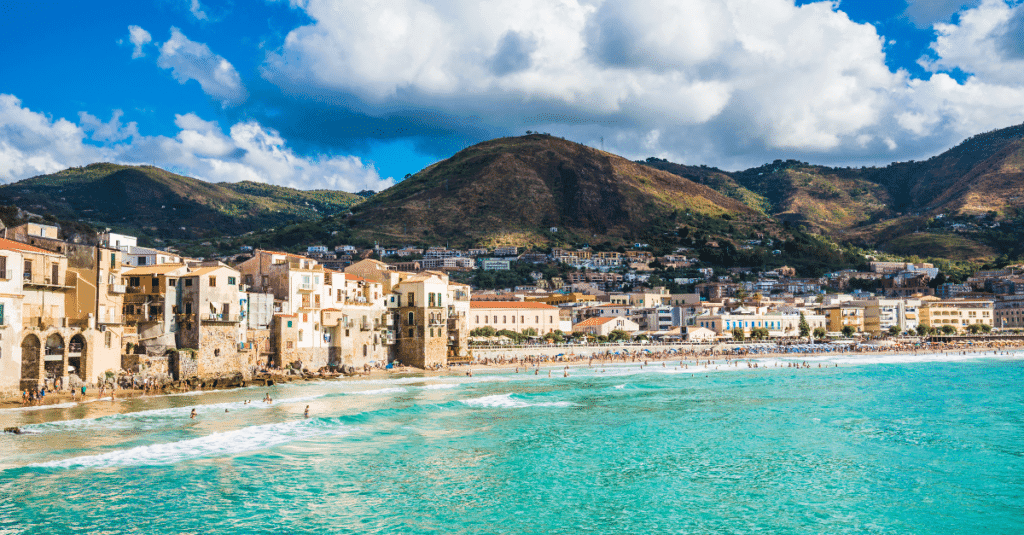
Southern Italy offers the most affordable housing. Single rooms can cost €250 to €500, while full apartments are often available for under €670. Lower rents, combined with a slower pace of life and lower daily expenses, make these regions especially attractive for retirees and remote workers.
Grocery Prices and Dining in Italy
Food is one of the most manageable parts of the Italy cost of living, and for many expats, one of the most enjoyable. Monthly grocery prices in Italy typically range between €200 and €350 for a single person, depending on shopping habits and location. Local staples remain affordable, with bread averaging €1.81 per pound and eggs around €3.42 per dozen, while imported US products tend to cost more due to shipping and taxes.
Dining out is also reasonably priced compared to many Western countries. A typical inexpensive restaurant meal costs about €15, while a mid-range three-course dinner for two averages €60, making regular dining realistic even on a moderate budget. Budget-conscious residents often shop at supermarkets such as Esselunga for quality-to-price balance and Lidl for consistently low prices nationwide.
Everyday Grocery Price Snapshot
| Item | Average Price (Italy 2026) |
| Milk (1 liter) | €1.67 |
| Water (1.5 liter bottle) | €0.43 |
| Bread (1 lb) | €1.81 |
| Eggs (12) | €3.42 |
| Inexpensive Restaurant Meal | €15 |
| Mid-Range Dinner for Two | €60 |
Affordable groceries, fresh local produce, and reasonably priced dining all contribute to Italy’s reputation as a country where everyday living remains accessible without sacrificing quality. Next, we explore the average salary in Italy and the North-South income divide, an important factor when evaluating long-term financial sustainability.
Average Salary in Italy: The North-South Divide
Understanding income levels is essential when evaluating the long-term Italy cost of living. In 2026, the average monthly net salary for a full-time worker is approximately €1,713. However, earnings vary significantly by region, with northern Italy offering stronger wages and broader career opportunities than the south.
In Lombardy, Italy’s economic engine, the average gross annual salary is around €31,400, while in southern regions such as Basilicata it falls closer to €24,300. This regional divide explains why many professionals choose northern cities for employment, while remote workers and retirees often prefer the south, where living costs are lower. Specialized roles in tech and engineering remain outliers, with experienced professionals earning €3,000 to €3,700 per month in cities like Milan, Turin, and Bologna.
Average Net Monthly Salary Comparison by City Tier (2026)
| City Tier | Italy | United Kingdom | United States |
| Major Economic Hub | Milan — €2,200 | London — €3,350 | New York — €4,250 |
| Large Capital / Major City | Rome — €2,050 | Manchester — €2,650 | Chicago — €3,700 |
| Mid-Size / Regional City | Bologna — €1,950 | Birmingham — €2,450 | Austin — €3,400 |
While salaries in the UK and US remain higher, everyday living costs in Italy are significantly lower, especially in healthcare, housing, and food. This balance often allows expats, remote workers, and retirees to maintain a comfortable lifestyle despite lower local income levels.
Affordable Places to Live in Italy (2026 Picks)

For retirees and remote workers searching for the most affordable places to live in Italy, southern regions consistently offer the best value. Lower housing costs, inexpensive groceries, and a slower pace of life allow many expats to maintain a comfortable lifestyle for far less than in northern cities.
Two standout locations are Lecce (Puglia) and Cosenza (Calabria). Lecce, often called the “Florence of the South,” combines baroque architecture, strong healthcare access, and good transport links with modest living costs. Cosenza is known for its mild climate, coastal proximity, and very low rental prices, making it especially attractive for long-term living.
In both cities, it is realistic for a single person to live comfortably on a total monthly budget starting from around €950, including rent. These southern destinations show that Italy can be remarkably affordable when you look beyond Milan, Rome, and Florence, offering expats a balanced lifestyle without high financial pressure.
Still weighing whether Italy is the right fit for your lifestyle and budget? We’ve put together a detailed guide on the pros and cons of living in Italy to break down the realities beyond just the numbers.
Is Living in Italy Worth It in 2026?
Italy may not be cheap in cities like Milan or Rome, but overall living costs remain about 35% lower than in the US, while maintaining strong healthcare, food quality, and lifestyle. With the right location choice, living in Italy can be both affordable and sustainable.
Mid-sized northern cities offer better job access at moderate costs, while southern regions provide the most budget-friendly path to a relaxed Mediterranean lifestyle. For many expats, this balance makes long-term life in Italy financially realistic.
Understanding the Italy cost of living is only the first step. The legal experts assist non-EU citizens with visas, residency, and relocation planning to ensure a smooth transition.
Ready to move forward? Our trusted Italian immigration lawyers are on standby. Simply fill out the form below to start planning your move to Italy.