 Skip to content

For many expats and foreigners, European citizenship by naturalization is one of the most common ways to become a full citizen of an EU country. It usually means living in a country for several years, settling into daily life, and meeting requirements like language skills or cultural knowledge.
The payoff is huge: EU citizenship gives you the freedom to live, work, and study in any of the 27 member states, plus visa-free travel to over 180 countries.
Of course, every country has its own rules, but some stand out for being more straightforward than others. In this blog, we’ll explore five of the easiest countries in Europe to get citizenship by naturalization, looking at things like residency periods, dual citizenship policies, and language requirements to help you see which might be the best fit.
Table of Contents
- Understanding European Citizenship by Naturalization: Key Factors
- The 5 Easiest Countries to Get European Citizenship by Naturalization
- Alternative Pathways: Citizenship by Descent, Investment & Special Cases
- Important Considerations Before Applying for European Citizenship by Naturalization
- Ready to Kickstart Your European Citizenship by Naturalization Journey?
Understanding European Citizenship by Naturalization: Key Factors
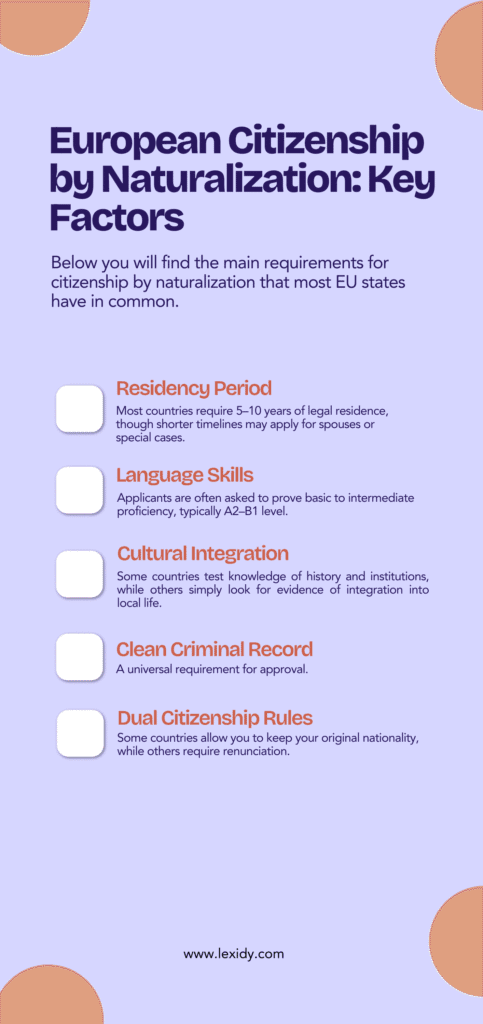
Before diving into the easiest countries for naturalization, it helps to know the main requirements most EU states have in common. While details differ, authorities usually look at:
- Residency period: Most countries require 5–10 years of legal residence, though shorter timelines may apply for spouses or special cases.
- Language skills: Applicants are often asked to prove basic to intermediate proficiency, typically A2–B1 level.
- Cultural integration: Some countries test knowledge of history and institutions, while others simply look for evidence of integration into local life.
- Clean criminal record: A universal requirement for approval.
- Dual citizenship rules: Some countries allow you to keep your original nationality, while others require renunciation.
These factors largely shape how straightforward the process feels. Next, let’s look at the five European countries where the pathway is considered the easiest.
The 5 Easiest Countries to Get European Citizenship by Naturalization
Below are five European nations often recognized for having comparatively accessible naturalization pathways. No country is truly “easy,” since applicants must always meet the official requirements and follow the legal process.
These examples stand out because their pathways are often viewed as more straightforward, usually due to shorter residency periods, flexible language rules, allowance of dual citizenship, and clearer procedures.
Portugal

Why it’s considered relatively easy: Historically offered a 5-year residency requirement, accepts dual citizenship, and requires only basic language proficiency (A2).
Key Requirements:
- Residency: Typically, 5 years of legal residence. New reforms may extend this to 10 years for most, or 7 years for Portuguese-speaking nationals
- Language: Portuguese A2 (CIPLE exam) required
- Integration: Basic civic knowledge and intent to integrate. There may be a more formal civic exam under new proposals
- Dual citizenship: Allowed
- Criminal record: No conviction with a prison sentence of over 3 years
- Process: Hold valid residence permits (e.g., D7, D8, Golden Visa), satisfy stay requirements, and submit your citizenship application to the immigration authority. The process can take 6–12+ months.
*Note on Potential Changes*
As of now, Portugal requires five years of legal residence for citizenship by naturalization. However, in 2025, lawmakers are discussing reforms that could extend the requirement to ten years for most applicants (seven for Portuguese-speaking nationals) and introduce stricter integration tests. These proposals are not yet law. This guide will be updated immediately if and when the changes are officially enacted. Have any questions? Fill out the form below to talk with one of our immigration experts.
Spain

Why it’s considered relatively accessible: Spain has a defined path to European citizenship by naturalization, though the required residency period is one of the longest in Europe. Certain applicants can qualify much sooner, and while Spain’s dual citizenship policy is restrictive on paper, in practice, it’s more flexible.
- Residency: The standard is 10 years of continuous legal residence. Reduced period in some cases:
- 5 years for refugees
- 2 years for nationals of Ibero-American countries, Andorra, the Philippines, Equatorial Guinea, Portugal, and people of Sephardic origin
- 1 year in limited cases (e.g., marriage to a Spanish citizen, birth in Spain, Spanish parents or grandparents)
- Language: A2 Spanish proficiency (verified through the DELE exam, except for native speakers)
- Integration: Passing the CCSE exam on Spanish culture, society, and constitutional knowledge
- Criminal Record: Clean criminal record (Spain + country of origin)
- Dual Citizenship:
- Officially recognized with certain countries (Ibero-American, Andorra, Philippines, Equatorial Guinea, Portugal)
- For others, applicants must formally renounce original nationality during the process, though in practice this is symbolic as long as the other passport isn’t used for official purposes in Spain
- Process: Apply at the Civil Registry after meeting the residency threshold, submit documents, pass exams, and await Ministry of Justice approval
France
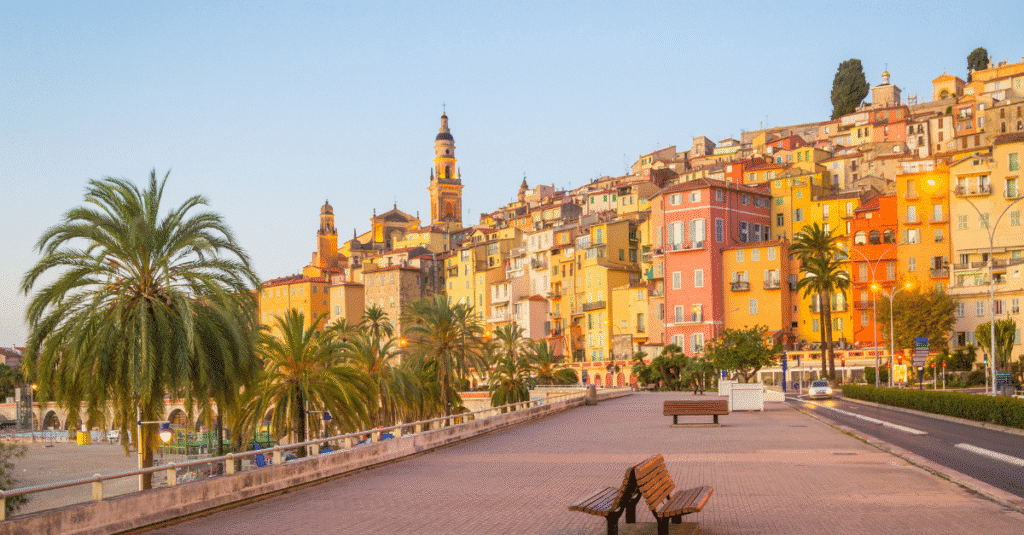
Why it’s considered relatively easy: Citizenship by naturalization in France requires 5-year standard residency, and dual citizenship is allowed. There are simplified paths for exceptional integration or education-based residency reductions.
Key Requirements:
- Residency: 5 years of continuous legal residence. Reduced to 2 years in some cases (e.g. after completing two years of higher education in France).
- Language: B1 level French proficiency.
- Integration: Interview before the prefecture to assess assimilation into French society, knowledge of culture, values, and motivation.
- Dual citizenship: Allowed.
- Criminal record: Clean record required.
- Process: Submit application at the prefecture (with relevant documentation), go through language and integration checks/interview, wait for decision (naturalization decree), then if required complete any formal steps (which may include an oath).
Germany
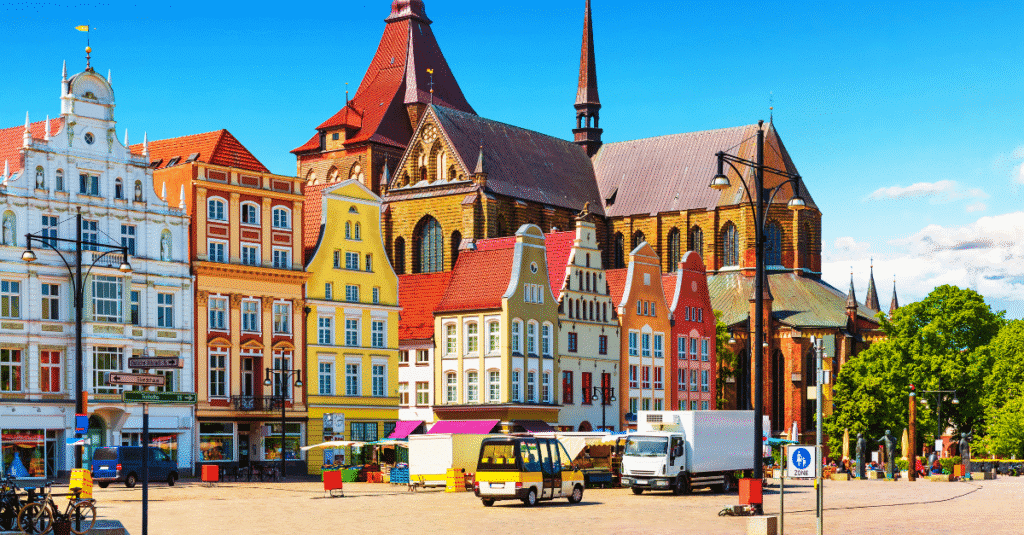
Why it’s considered relatively easy: It requires just 5 years of legal residency (or 3 years with an integration course and as the spouse of a citizen). Dual citizenship is permitted under certain conditions.
Key Requirements:
- Residency: 5 years of regular residence; reduced to 3 years if you’re married to a German citizen or integrated through Integrationskurs with C1 level language
- Language: Minimum B1 requirement (or C1 if shorter residency reduction)
- Integration: Civic knowledge assessment and proof of cultural integration
- Dual citizenship: Allowed generally under new 2024 law, especially for U.S. citizens and EU nationals
- Criminal record: Clean record required
- Process: Submit the application at the local immigration office, pass your citizenship test, provide all necessary documents, take the oath, and receive your naturalization certificate.
Malta
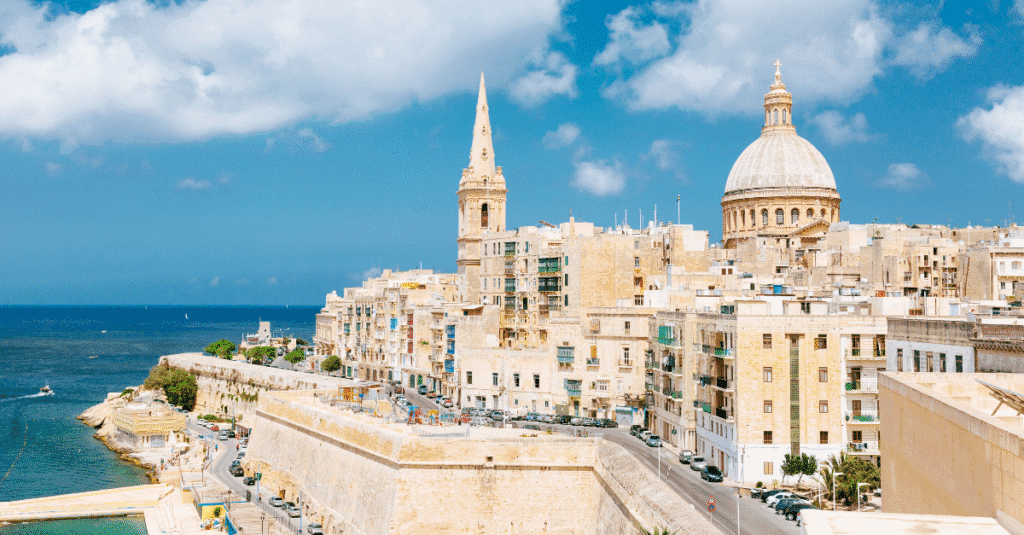
Why it’s considered relatively easy: Malta offers one of the fastest citizenship by naturalization in Europe, at as little as 1 year under certain conditions. While standard naturalization requires a longer stay, Malta’s small population and flexible dual citizenship policy make it attractive for investors, retirees, and long-term residents.
Key Requirements:
- Residency:
- Standard route: 5–18 years of residence (with proof of integration and ties to Malta)
- Exceptional Investor route: Minimum 1–3 years of residency with substantial economic contribution (via the MEIN policy)
- Language: There is no official Maltese language test, but applicants must show some cultural integration and basic communication ability
- Integration: Applicants should demonstrate ties to Malta through local community participation, property ownership, tax residency, etc
- Dual citizenship: Fully allowed. Malta does not require you to renounce your previous citizenship
- Criminal record: Must be clean and background checks are rigorous, especially under the investor route
- Process:
For standard naturalization, applicants must submit the application to the Department for Citizenship and Expatriate Affairs after the required years of legal residence. For Exceptional Investor Naturalization, applicants must contribute to the National Development and Social Fund, hold residence for 1–3 years, and then pass strict due diligence checks.
These five countries, Portugal, Spain, France, Germany, and Malta, offer among the most favorable paths to European citizenship when looking at naturalization. Shorter residency, flexible language tests, and support for dual nationality make them stand out for expats, professionals, and investors.
Alternative Pathways: Citizenship by Descent, Investment & Special Cases
While we are primarily focusing on European citizenship through naturalization, there are alternative pathways that may offer faster or more accessible routes for some individuals. These options typically depend on ancestry, financial means, or family ties.
Citizenship by Descent (Jus Sanguinis)
If you have European ancestry, you may be eligible for citizenship by descent (jus sanguinis). This is often one of the fastest routes to EU citizenship, since it can bypass long residency requirements, language exams, and cultural tests.
Examples of descent-based policies:
- Ireland: Citizenship is available if you have at least one grandparent born in Ireland. (Great-grandparent cases depend on prior registration.)
- Poland, Hungary, Lithuania: Pathways exist for descendants of emigrants, though documentation standards are strict, and in some cases proof of ongoing ties is required.
- Italy (recent change): Previously unlimited, but since March 2025 eligibility is usually limited to having a parent or grandparent born in Italy, unless special conditions apply.
If eligible, this pathway bypasses naturalization entirely, letting you apply directly through ancestry recognition.
Citizenship by Investment
Only a few EU countries offer true Citizenship by Investment programs. As the name suggests, citizenship is granted in exchange for a significant financial contribution:
- Malta: The only EU country currently offering a legal and structured investment route to citizenship. Costs can exceed €600,000+ and include residency, donations, and investments.
It’s important to note:
- These programs are highly expensive.
- They are under increasing scrutiny from the EU for ethical and security concerns.
- Applicants often must reside in the country for a period, even if minimal.
Citizenship by Investment is not considered naturalization and is typically reserved for high-net-worth individuals.
Citizenship by Marriage
If you’re married to a citizen of an EU country, many states offer a fast-tracked naturalization process:
- Portugal: Citizenship is possible after 3 years of marriage, even if you don’t live in Portugal (you just have to be married to a Portuguese citizen).
- Spain, France, and others: Shorter residency requirements (usually 1–2 years) if married and living together in the country.
This path still involves language or cultural requirements, but the residency period is significantly reduced, making it attractive to many couples.
Important Considerations Before Applying for European Citizenship by Naturalization

Before beginning your application process for European citizenship by naturalization, it’s essential to understand the broader legal and practical landscape. Even in the “easiest” countries, the process involves careful planning, strict adherence to regulations, and often a long wait. Below are the most important factors to keep in mind:
Legal Advice is Crucial
Naturalization laws and procedures vary by country and are subject to frequent changes. Consulting with immigration lawyers or legal experts ensures you understand the specific requirements and can avoid costly mistakes. This is especially important for applicants with complex cases, for example, if you have dual nationality concerns or periods of interrupted residency.
Residency vs. Citizenship
Many confuse long-term residency with citizenship. Residency allows you to live in a country, but citizenship offers full rights, including voting, holding a passport, and freedom of movement across the EU.
Continuity of Residency
One of the most common pitfalls in European citizenship by naturalization is failing to maintain continuous residency. Many countries require you to have lived in their territory without long absences (often not exceeding 6–10 months total) during the qualifying period. Even brief interruptions can reset the clock. It is essential that you are aware of the time constraints to avoid any rejections or delays.
Documentation
Naturalization requires extensive documentation. Proof of residency, language certificates, integration exam results, criminal background checks, and financial records, to name a few. Having these documents prepared, translated (if required), and legalized can take time. Meticulous record-keeping from the start of your residency is crucial.
Processing Times
Even after meeting all requirements and submitting a complete application, you may still wait months or even years for approval. Processing times vary widely between countries and depend on caseloads of government officials, local bureaucracy, and individual circumstances. Patience and starting as soon as possible are essential.
Dual Citizenship Implications
Before applying, verify whether your current country of citizenship allows dual nationality and whether your target EU country permits it in the context of naturalization. While countries like France and Portugal are dual-citizenship friendly, others (e.g., the Netherlands or Austria) are more restrictive. Giving up your original nationality can have significant personal and legal implications.
Ready to Kickstart Your European Citizenship by Naturalization Journey?
European citizenship by naturalization is a powerful long-term goal for many non-EU nationals seeking freedom of movement, expanded rights, and a deeper connection to life in Europe. While some countries offer more favorable timelines or flexible requirements, there’s no true “shortcut” to citizenship. Each path demands legal residency, cultural integration, and careful adherence to the rules.
That said, with the right planning, expert guidance, and patience, naturalization can be a very achievable route, especially in countries like Portugal, Spain, or France.
Is European Citizenship by Naturalization Right for You?
Before you begin the process, reflect on your long-term intentions:
- Are you prepared to reside continuously in your country of choice for several years?
- Can you meet the language or integration requirements?
- Do you understand how this move aligns with your current citizenship and future goals?
If the answer is yes, then now is the time to start laying the groundwork.
Need Legal Support?
Whether you’re just starting your research or are already on a path to European citizenship by naturalization, having expert legal support can save you time, stress, and costly mistakes. Fill out the form below to book a free consultation with our expert immigration lawyers to evaluate your eligibility, clarify the steps, and move forward with confidence.